Move Over San Salvador: There's a New Wahoo Hotspot Closer to Home
By Paul Dozier
As a kid growing up fishing in the early 90’s in Northeast Florida, targeting blue water trolling fish meant you had to go to “the ledge”. The ledge is the edge of the continental shelf, some 50 to 65 nautical miles offshore, depending on which inlet you called home. Many days, captains would start inshore to maybe pick up a wahoo before venturing offshore to target billfish and other pelagics offshore of the ledge.
Inshore was considered three or four miles inshore of the ledge, or around 150 feet of water. No one dreamt of starting in 100 to 125 feet, particularly in the cold winter months of November through March to target world class wahoo, sailfish, giant king mackerel and blackfin tuna. Occasionally, in the warmer months, wahoo were caught as bycatch by king mackerel fishermen, but nobody ever thought of targeting them in the wintertime.
Changing the Game
In the early to mid 2000’s, the game began to change. Prior to then, targeting wahoo meant trolling rigged mullet and ballyhoo at seven-to-nine knots with planers, or maybe up to 10 knots trolling marlin lures over the bottom out near the ledge. It was effective and yielded some great catches over the years. Captain Don Combs, the founder of C&H Lures, holds the Northeast Florida Marlin Association club record with a 125-pounder caught in the late 80’s, which still stands to this date. A fish like that was considered a dinosaur, truly a once in a lifetime fish. Rarely was a 100-pound wahoo caught, and when it was, it was newsworthy.
But in the mid 2000’s, captains began high-speed trolling at 12-to-18 knots, covering tons of ground and expanding their horizons. Of course, the high speeders fished the traditional wahoo grounds in 150 to 300 feet of water, but it was easier to venture off the grid or take an hour or so coming or going to fish inshore of the normal comfort zone. The high-speed fishermen began dominating the wahoo scene.
In 2011, the Northeast Florida Wahoo Shootout was born. The first year yielded an 85-boat field and was won with a three-fish aggregate total of 180 pounds. In year two, 88 boats competed, and 188 pounds won it. The first two years the tournament was won by the same captain, Rob Rowe. Everyone thought he was the luckiest guy there was, catching big wahoo consistently. As it turns out it wasn’t luck at all. He was fishing where the big wahoo lived. Rowe was fishing inshore of the ledge nearly 15 miles in 130 feet of water on an area of live bottom holding bait while high speed trolling. Nobody ever saw him because who would think to look in there?
All to Themselves
“We were fishing well inshore of the fleet where the bait was.” Rowe remembered. “Really nothing fancy, just high speeding over our bottom spots. Nobody knew where we were. We got lucky I suppose.” At the time, Rowe was fishing a 38 Tiara named Knock Down, and since has begun traveling the world targeting billfish on his boats Free Spool and Double R.
As with any secret fishing hole, word leaked out over time and more people started fishing in what’s known as the 21 fathoms area out of St. Augustine. Numbers and size of fish increased over the years, and the popularity of high-speed wahoo fishing skyrocketed. High-speed wahoo fishing was the new cool thing, great for beginners because they could experience success as the learning curve was not as extreme as many other methods of fishing. People poured into local tackle shops buying 50- to 130-pound high-speed outfits, a set of high-speed lures and went wahoo fishing.
Dave Workman, owner of Strike-Zone Fishing in Jacksonville and Wahoo-Zone.com, was at the forefront of the wahoo craze. Workman and his crew worked around the clock outfitting boats, rigging lures, re-skirting lures and even re-tying knots for guys that had just jumped into the game. The day after a good fishing day during the Wahoo Shootout, his staff would work nonstop rerigging their customers up to get them ready to go the next day.” It was wide open,” Workman said. “Our staff worked hard to keep the guys fishing. It was as fast as we could go for a couple years in the thick of it.”
Shifting Strategies
Captains started fishing traditional bottom fishing areas from Ponce Inlet to South Georgia, high-speeding and catching limits of wahoo (two per person) regularly. It was not uncommon for a captain to cover 30 to 50 miles of coast a day, jumping from bottom spot to bottom spot until they found what they were looking for. What were they looking for? Bait.
As in any type fishing, finding bait is extremely important to success, but maybe even more so when targeting big wahoo. At first it seemed like the fishermen were looking for schools of “beeliner” (vermillion) snapper. One of the hottest high-speed lures was even a C&H Mr. Big in a beeliner color. Then the guys shifted their focus to big schools of blue runners, which now frequent the Northeast Florida waters year around. It hasn’t always been like that. In recent years, water temperatures have been bottoming out near 68 to 70 degrees in the winter months in the 100 to 120 feet areas and seems tolerable for the blue runners to never migrate south for the winter. In earlier years it would get much colder, at times dropping to the low 60’s.
Captain Jason Hadjis, of J Hook Fishing Charters out of St. Augustine, has been fishing the 21-fathom area for 30-plus years and often targets big wahoo in the wintertime. He has noticed the changes over the years, not only with the blue runner population, but also an abundance of bottom fish such as yellowtail and mutton snapper, which were extremely rare years ago.
High-speed trolling dominated the Northeast Florida Wahoo Shootout since its inception in 2011. Only one boat has won the event exclusively dead bait fishing, the Gameday in 2014, with a 238-pound aggregate total. Dead-baiting for wahoo can still be effective at times, but the lack of ground covered made high-speeding the method of choice for top captains until someone started thinking outside the box. Or did they?
Match the Hatch
When fishing kingfish tournaments in Northeast Florida, one of the keys to success is to catch fresh live bait versus using trucked in live bait from South Florida. When the bait began living in Northeast Florida in the wintertime, a couple of kingfish tournament veterans tried their game using kingfish methods for wintertime wahoo.
Captain Frank Strickland and Captain Lee Way were two of the first to try live baiting wahoo in the winter off St. Augustine and Mayport. They would high speed until locating the bait and then catch a few baits and deploy them. Each of them had some good days catching multiple nice fish but never landed a giant. Of course, there were stories of lost big ones, and it is probably easy to imagine since they were fishing with light kingfish tackle. Unfortunately, we lost Strickland to cancer and Way to a tragic accident a few years ago and they aren’t here to see how close they were to a breakthrough.
In 2023, something was different. The Wahoo Shootout had grown to 225-plus boats, but the size of the fish had always seemed to stay about the same year after year. As tackle and electronics technology improved and captains figured out where these big wahoo were living, they caught more numbers, but an 80-pounder was still considered big, a 90-pounder was a giant, and if a 100-pounder hit the scale, a celebration occurred.
The Fish Get Bigger
But about midway through the tournament in 2023, the fish started getting noticeably different: They were bigger. The smaller fish were 50-pound class fish and multiple 60’s and 70-pounders weren’t uncommon. Everyone was extremely tight lipped and had the biggest smiles you could ever imagine. They were having more fun catching these big fish. The secret didn’t take long to get out. They were live baiting these big wahoo.
Captain Frank Vining, of the Walk Thru II was one of the first to have success. Vining, an accomplished high-speed fisherman in his own right, had cracked the code. Up the traditional kingfish tackle to bigger wire, hooks and baits and hope to get them to the boat before the sharks get them.
“We were struggling high-speeding and figured why not try it,” Vining said. “There were 10 boats fishing the spot we were on and only one fish had been caught. We were marking tons of bait and fish and knew they were there, but they just weren’t biting the lures. There was a learning curve, and we still learn something new every trip. First morning we tried, it the sharks ate us up pretty bad, so we went high-speeding but tried again that afternoon and caught four nice fish. It was so much fun, and we were hooked.”
Vining had teamed up with Captains Neal Torley and Mickey Gressinger before the tournament, and they combined to place each of their boats in the top 10. Obviously, the high-speeders saw what they were doing, and it didn’t take long before a good number of captains had made the switch to live bait.
Captain Zack Wilson set the tournament record with a 261.28-pound aggregate with a giant 111.70-pounder with less than a week left in the 2023 tournament while live baiting. The full moon had passed, the weather looked bad for the finish of the tournament, and we all thought it was over. Boy, were we wrong. The weather improved slightly and a couple of boats in contention had a day left but would need a miracle to upend the Bigger and Better crew. The last afternoon, March 26, 2023, my phone came alive. Big fish had been caught and the lead we all thought was insurmountable was now in real doubt.
In the Wahoo Shootout, captains have the choice to weigh their fish the afternoon of the fishing day or the next morning, which is what most choose. Captain Mike Bell of Hells Bells had caught a big fish and Stewart Witt on Git Witt It had landed two big ones. Witt had already scaled a 93-pounder earlier in the tournament, so he was Wilson’s main contender.
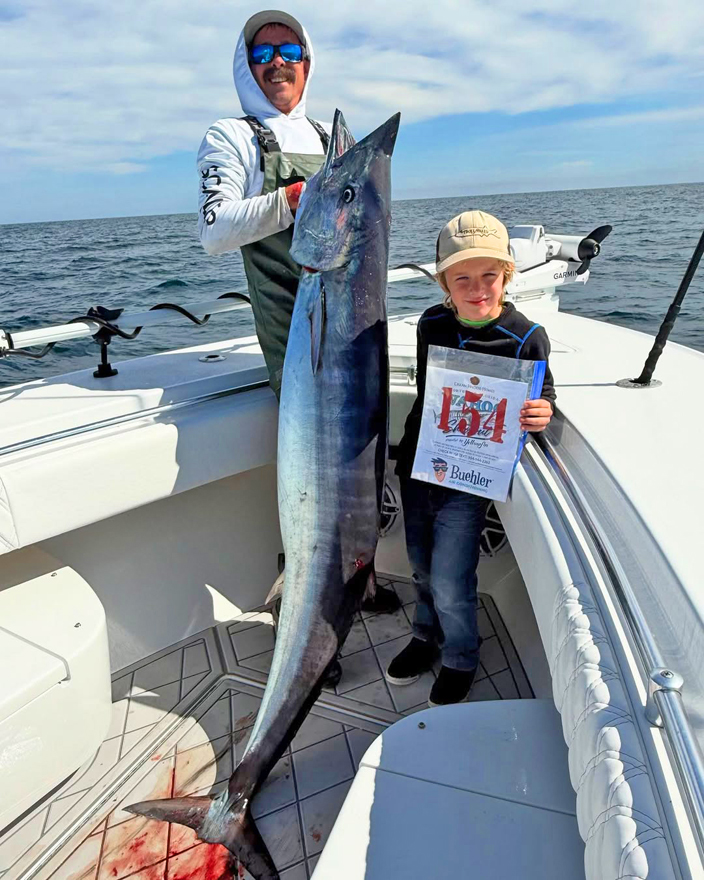
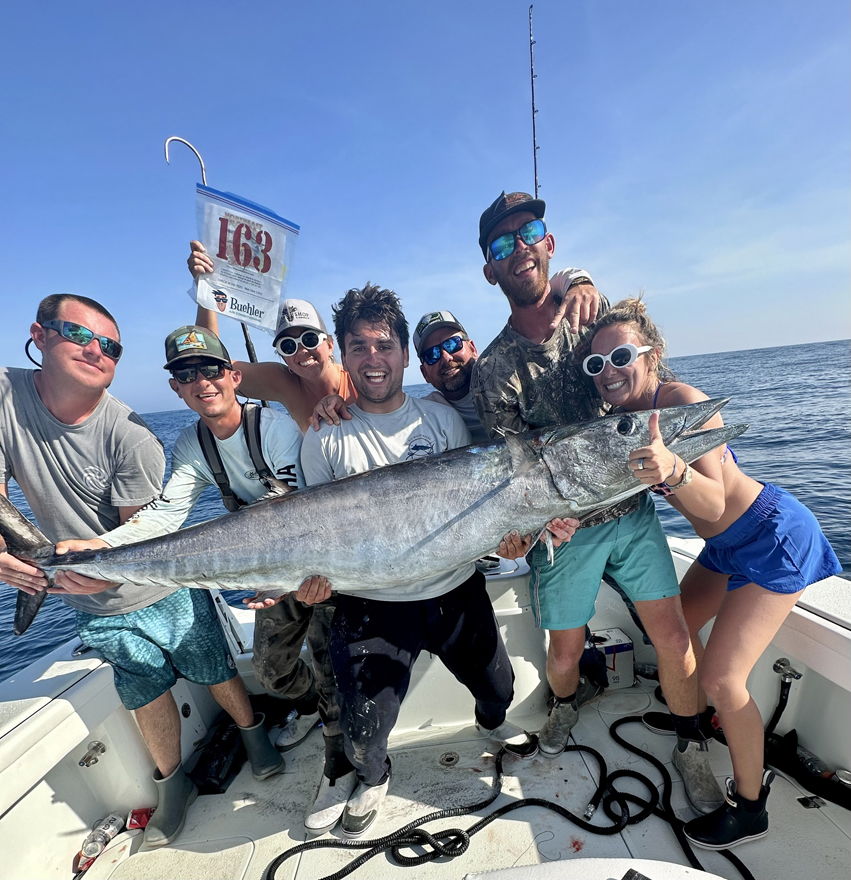
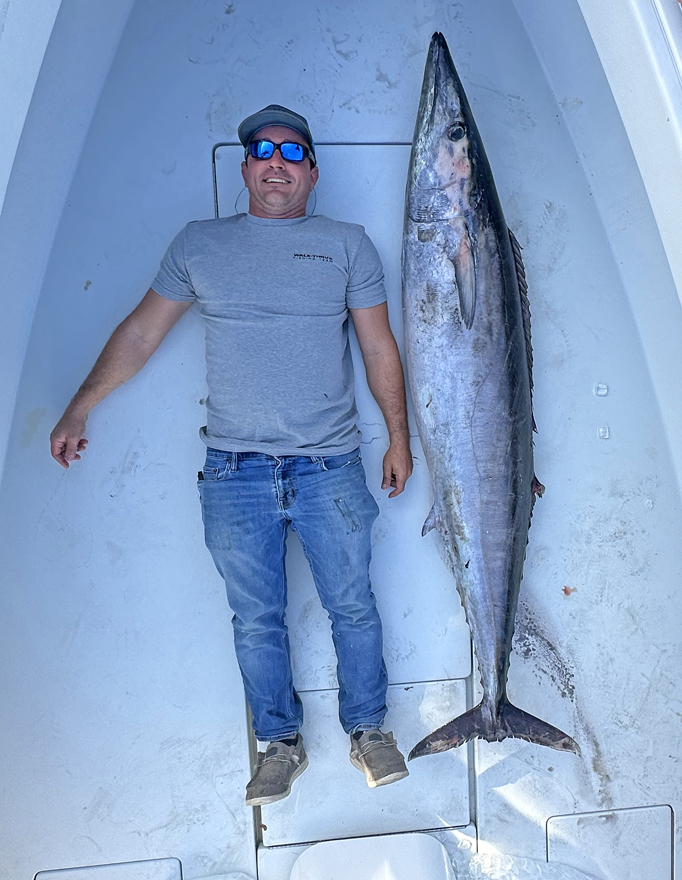
Hells Bells was first to weigh the next morning and scaled a massive 113.22-pound wahoo to knock Wilson from biggest fish. But he still led the aggregate, which determines the winner. Witt and crew were next and hung a 96.16 on the scale. It was the small one. The next wahoo they pulled out was the biggest one I had ever laid my eyes on. It truly looked like a telephone pole and tipped the scales at a staggering 129.26 pounds for a three-fish aggregate total of 318.54 pounds! It is worth noting that the 96- and 93-pounders Witt and crew caught were caught high-speeding.
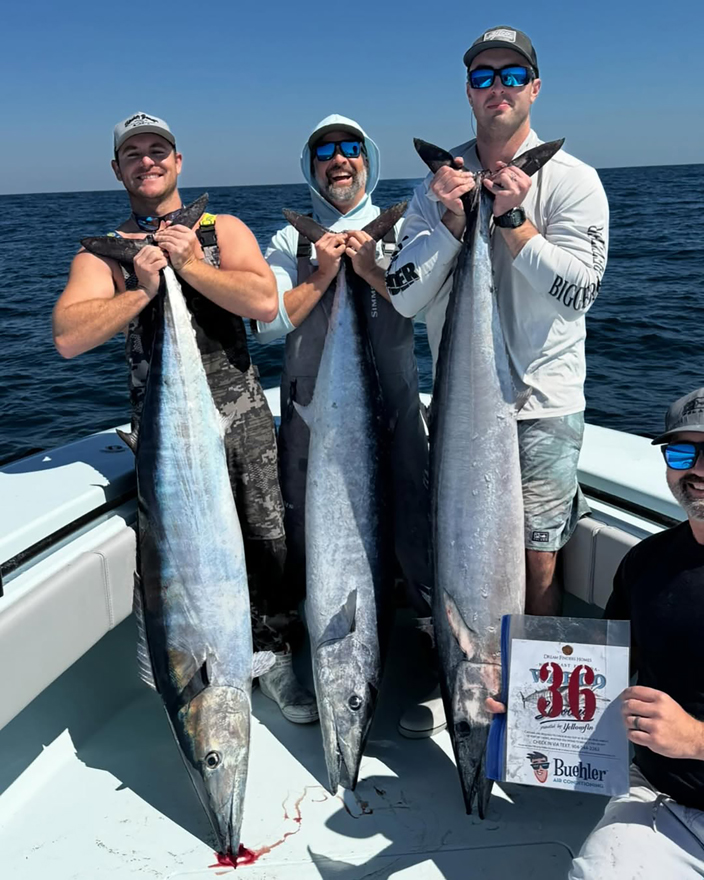
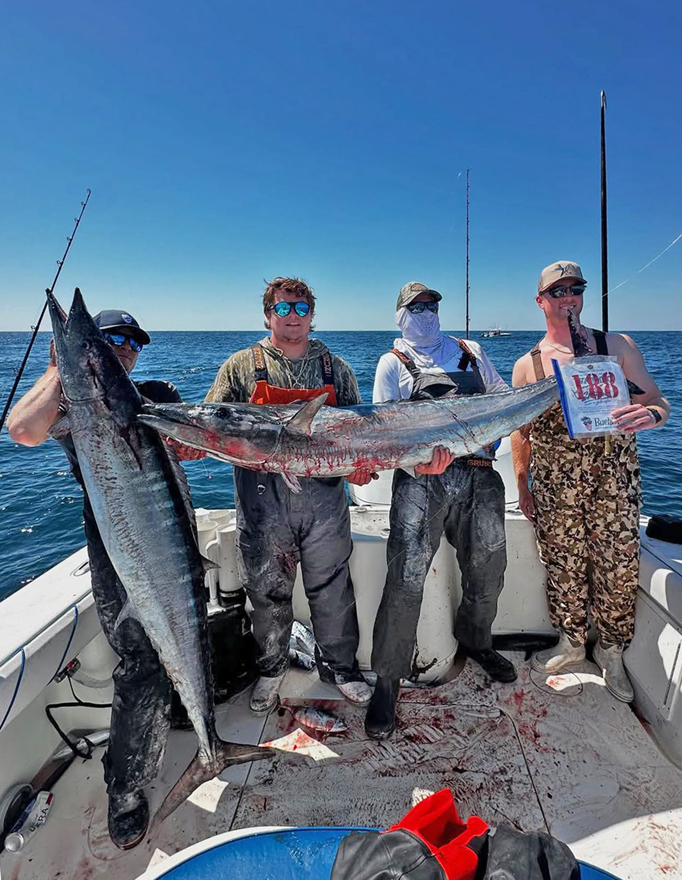
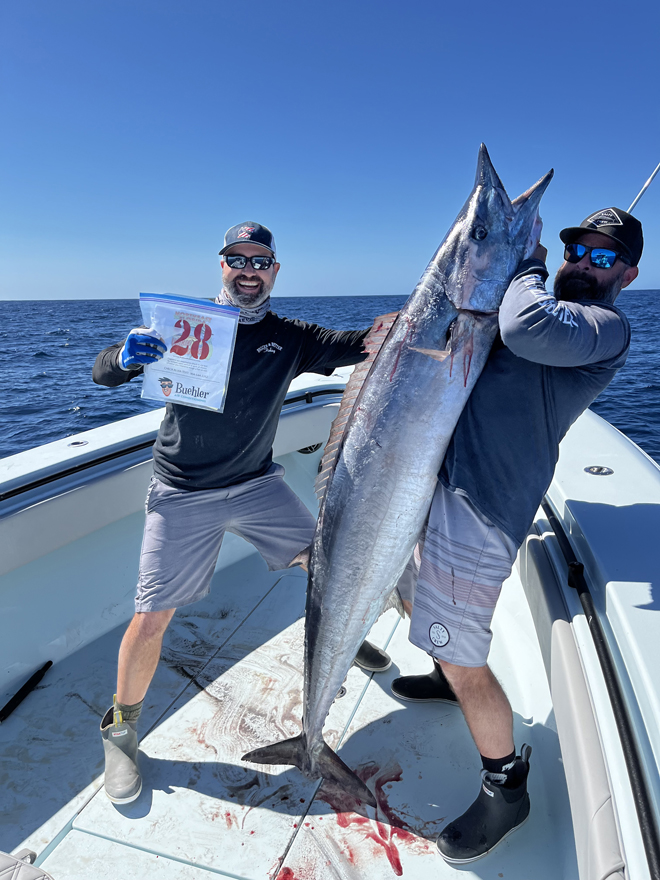
Many people knew the wahoo fishery in Northeast Florida was good but couldn’t have imagined it was this good. Five fish over 100 pounds caught in one year. Four of the five were caught using live bait. The secret is out; the game has changed again. Along with big wahoo, anglers are catching big king mackerel, sailfish and blackfin tuna as bycatch.
Live baiters dominated the Wahoo Shootout again in 2024, catching staggering numbers of big wahoo. Frank Vining’s Walk Thru 2 won the 2024 Wahoo Shootout with a 311-pound total including a 119- and 109-pounder caught the same day, and Captain Zack Wilson and the Bigger and Better crew got redemption from the heartbreak of 2023 with a Wahoo Shootout victory of their own in 2025, exclusively live baiting.
Live baiting is not for everyone and is far from a guarantee. The Wahoo Shootout has added a separate “trolling only” category for high-speeders and dead-bait fishermen. Many captains still choose to high-speed troll as their preferred method for wahoo and are still having good results. It seems that the high-speeders are catching better numbers of fish while the live baiters are catching better quality fish, but the sharks and trash fish can often be problematic.
While Workman has seen a shift in strategies, he thinks there’s room for both high-speeding and live bait. “Most of the guys are mixing it up,” he said. “We’re spooling the same customers 20’s and 80’s and they’re having success using both methods.” Workman added that the preferred outfit is a little more than a kingfish setup. “The guys seem to like the Shimano BFC with a heavier live-bait rod for the wahoo,” he said.
Only one fish over 100 pounds tipped the scales in the 2025 Wahoo Shootout and while it was caught live-baiting, several big fish, including a 91-pounder was caught on the high-speed lures. A few top captains have traded their 130’s and 80’s for 20’s and 25’s but the majority will use both. But one thing is for sure: A world class winter wahoo fishery lies off the coast of Northeast Florida.
Northeast Florida Wahoo Shootout: wahooshootout.com
Editor’s note: This story first appeared in InTheBite magazine.