The Revolutionary New PHIBER Engine Flush System
By Karl Anderson
Engine cooling systems are critical to keeping your engine(s) heathy. Heat is the enemy in any internal combustion engine and in the center console world, outboard engine manufacturers have recognized the importance of a clean raw water cooling system by integrating freshwater flush capabilities into the engine build. Every manufacturer provides recommendations in the owner’s manual for freshwater flush after use. typically recommending 5-15 minutes depending on engine size.
Preventing scale and mineral fouling build up in the cooling system is paramount to heat reduction which keeps seals and lube oil from breaking down and other components from suffering the effects of high heat. Metallurgy also plays a role in the cooling system’s health. In the past different metals could affect each other in the salt water through electrolysis and over time create issues with degradation and corrosion. Today, outboard manufacturers have fine-tuned metal compatibility so most of those dissimilarity problems have been addressed.
We have become accustomed to flushing the engines at the end of the day while they are still hot and the thermostats are open. to allow the water to flow freely through the cooling system. In some cases, we have aftermarket systems to do the job. Interestingly, most systems are time consuming and a great waste of water as they are geared to an outdated ABYC (American Boat & Yacht Council) standard based on their protocols written in 1949!
Problems begin when you don’t flush regularly. Flushing when the engines are cold and the thermostats are closed does not allow the water to fully flow through the engine and therefore does not properly flush. How does not flushing after use affect your warranty or maintenance costs? The answer is dramatically. ANY freshwater flush maintenance relies on the Honor System. In most cases, the only way to PROVE it is being performed is to take apart the engine and look at the condition of the internal cooling network. The proof is deep inside the engine, and verifying compliance can be expensive.
There have been a few aftermarket systems developed through the years aimed at reducing the burden of the freshwater flush, but they are all still compliant with rules written over 75 years ago. Even ABYC standards for seawater and freshwater systems were written in 1954 and didn’t evolve until 2025. In a world where nearly everything else on your boat is automated or available at push-button convenience, dragging out a garden hose at the end of the day to perform a freshwater flush is nothing short of an irritating chore. This process had not evolved to keep up with advances in technology as engines, electronics and composite materials have all surpassed the simple flush.
Then along came PHIBER Systems, (PHIBER-Pressurized Hydro Injection for Brine Evacuation), whose owner is also an active boat owner and realized a need for an updated, modern, fully engineered from-the-ground-up system. That system needed to be engineered to suit today’s engine manufacturer requirements using science and technology to perform a proper compliant freshwater flush for the health of your engine’s cooling system, with the added benefits of reducing the amount of water and time needed to properly flush your outboard or inboard engines, generators and gyro stabilizer raw water systems.
PHIBER Systems have come up with a finely engineered system with all components made in the U. S. A. that checks all the boxes for ease of installation and quality components. Typical aftermarket systems call for 15-20 minutes of flush per engine. PHIBER needs approximately three minutes. The idea is to reduce the PPM (parts per million) of dissolved solids, salt, in the cooling system water. Seawater typically averages between 35,000 to 50,000 ppm. By flushing, the fresh water replaces the harmful salt laying in the cooling system bringing the mineral content down to less than 1,500 ppm.
A typical garden hose has a flow rate of approximately eight to nine gallons per minute at 40 psi. That can mean as much as 140 gallons of water in a prescribed 15-minute flush. The actual flow depends on hose size, psi and engine size. However, most engines cannot accept that much water flow. Most seawater cooling systems have channels and passages that are the size of your pinky finger, so they can only handle about two to three gallons per minute of flow, so even if you connect an eight to nine gpm source, you’re only going to use about 45 gallons of fresh water to flush your engine. Through extensive testing and considering the engine manufacturers recommendations, the PHIBER system reduces the mineral content to within spec using just two to three gallons per engine.
PHIBER took a methodical approach to the flush, studying the process, the metrics, and the physics of it all. They determined there are three factors that had to be addressed:
- The Timing (immediately after the engine is removed from the seawater)
- The Duration (durable enough to fully displace the seawater in the network)
- The ppm (any water that remains in the seawater circuit be less than 1,000 ppm)
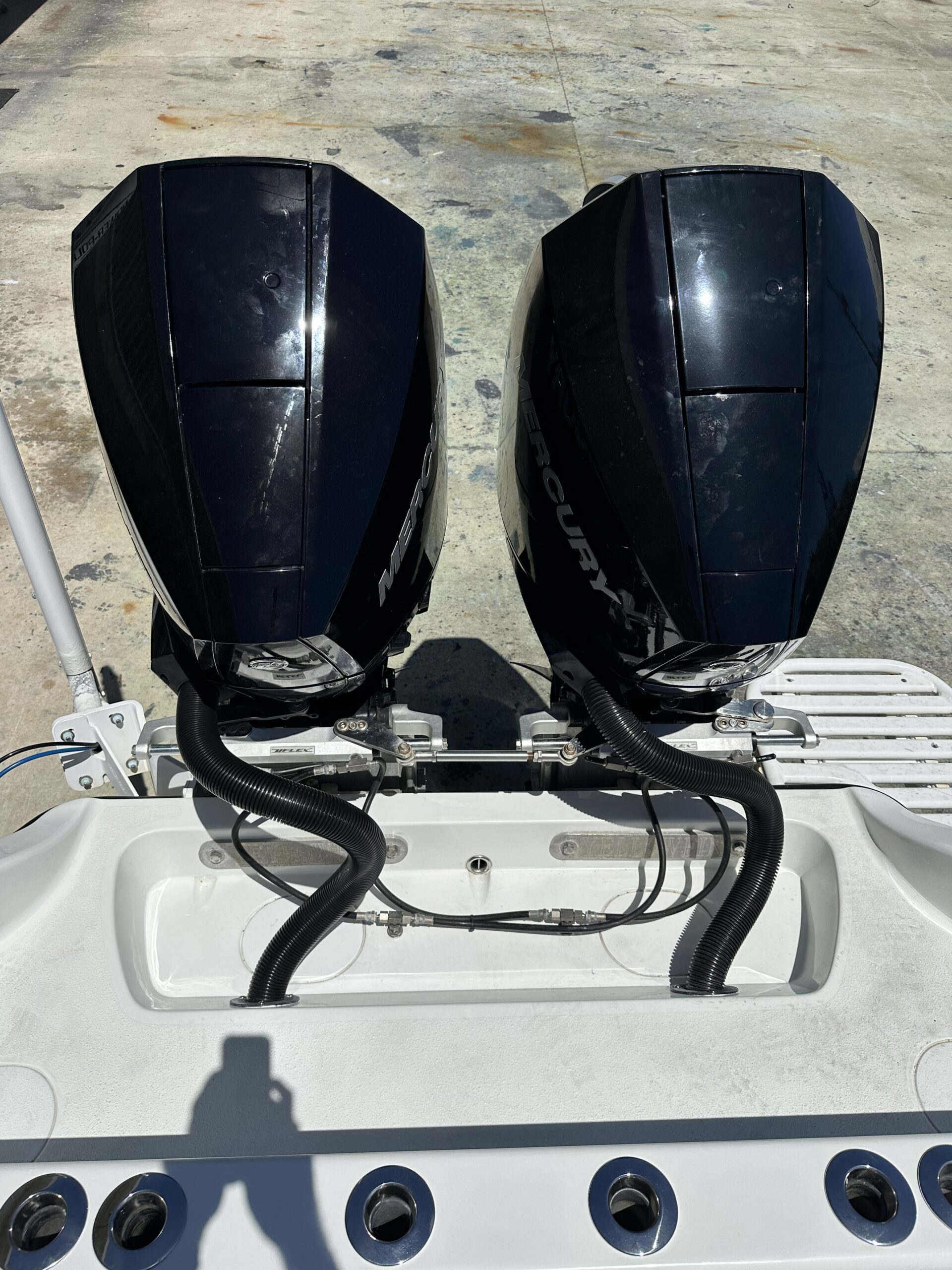
In comparison to traditional flushing methods, a PHIBER System needs approximately one minute of flush duration per engine and only two or three gallons of water. This has been verified through third party testing and in direct coordination and cooperation with marine engine manufacturers and boat builders. PHIBER Systems were originally developed to serve complex inboard engine seawater systems but quickly found a home aboard other systems that use seawater for cooling, including outboard engines, gyro stabilizers, generators and more.
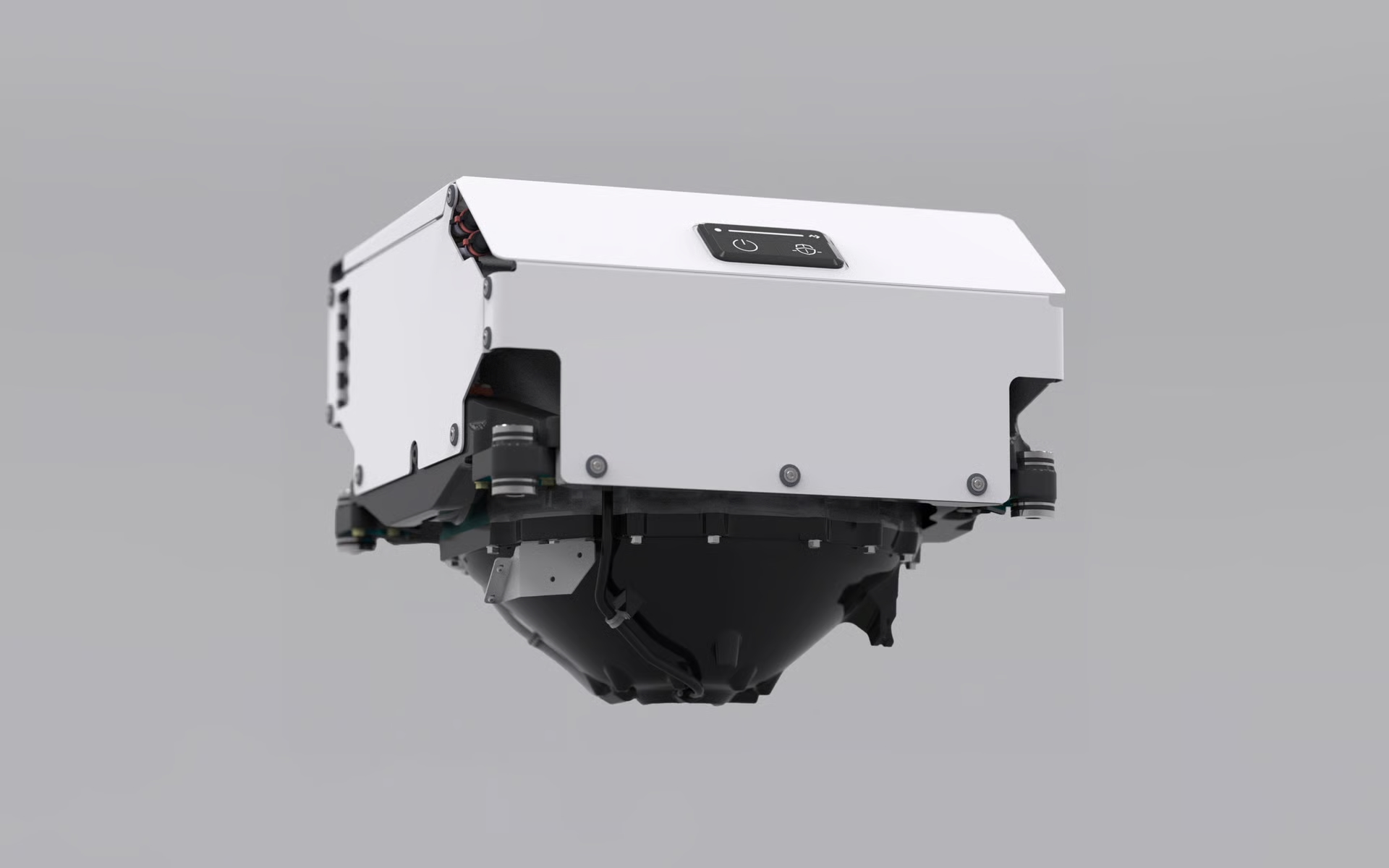
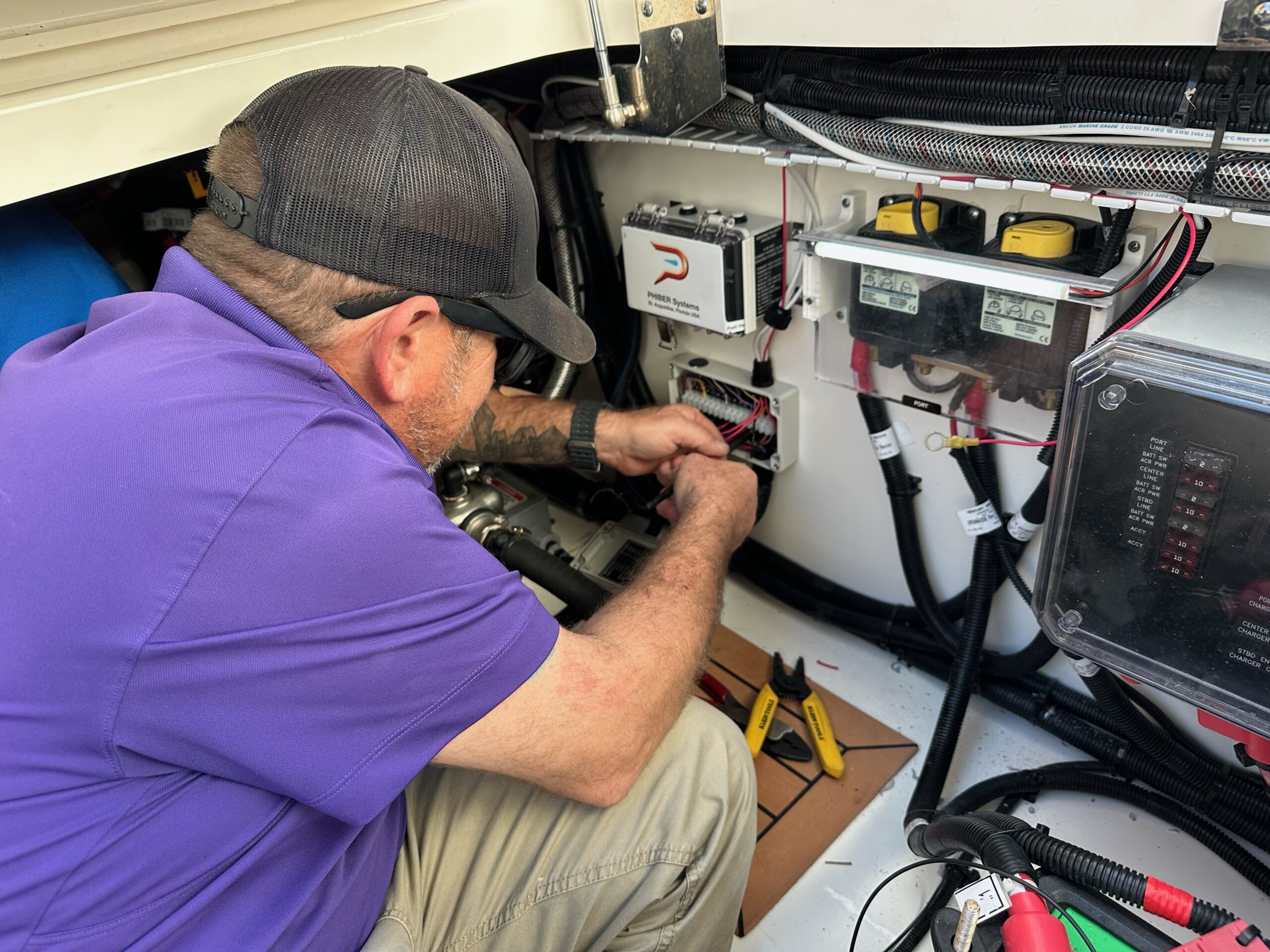
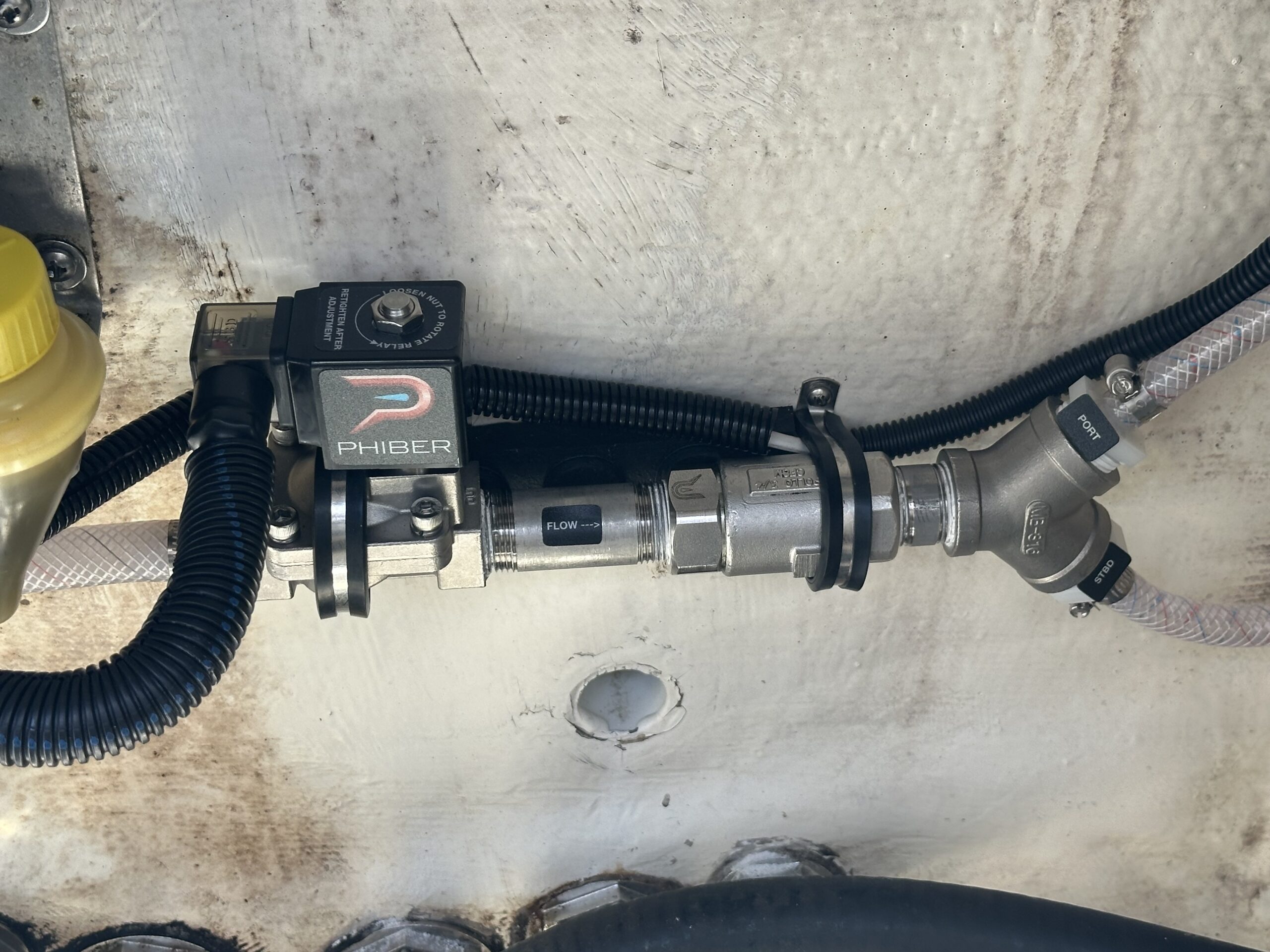
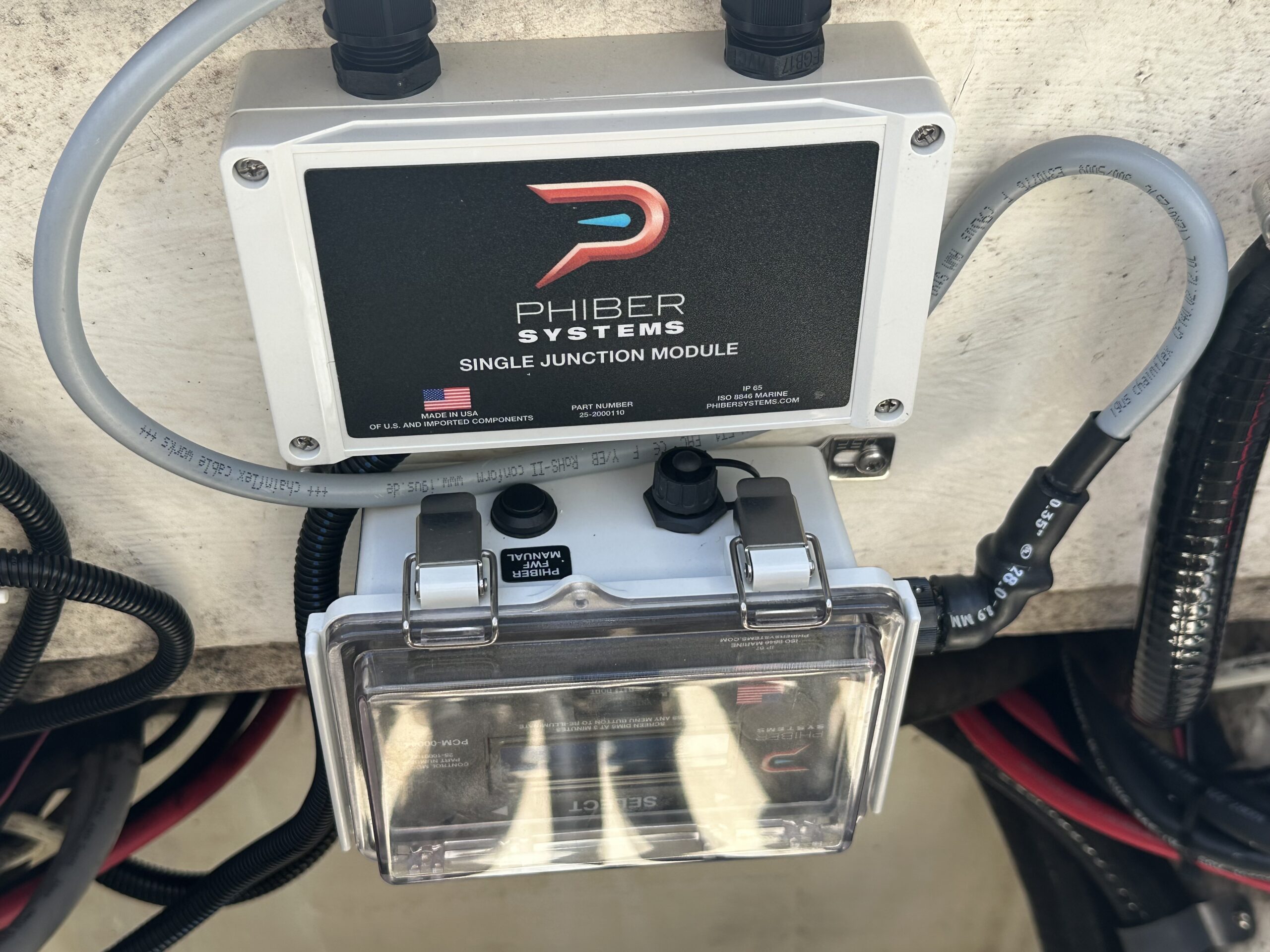
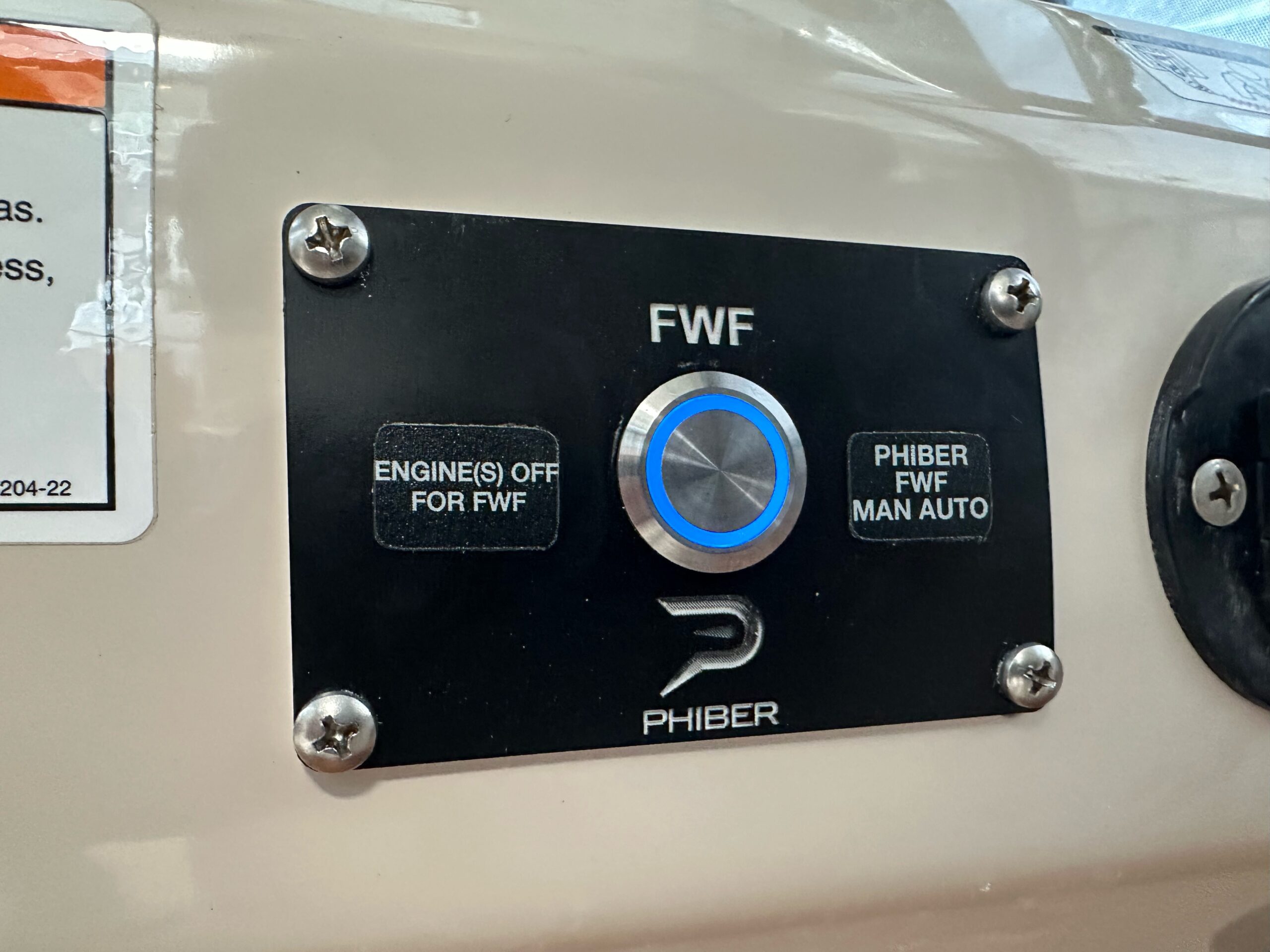
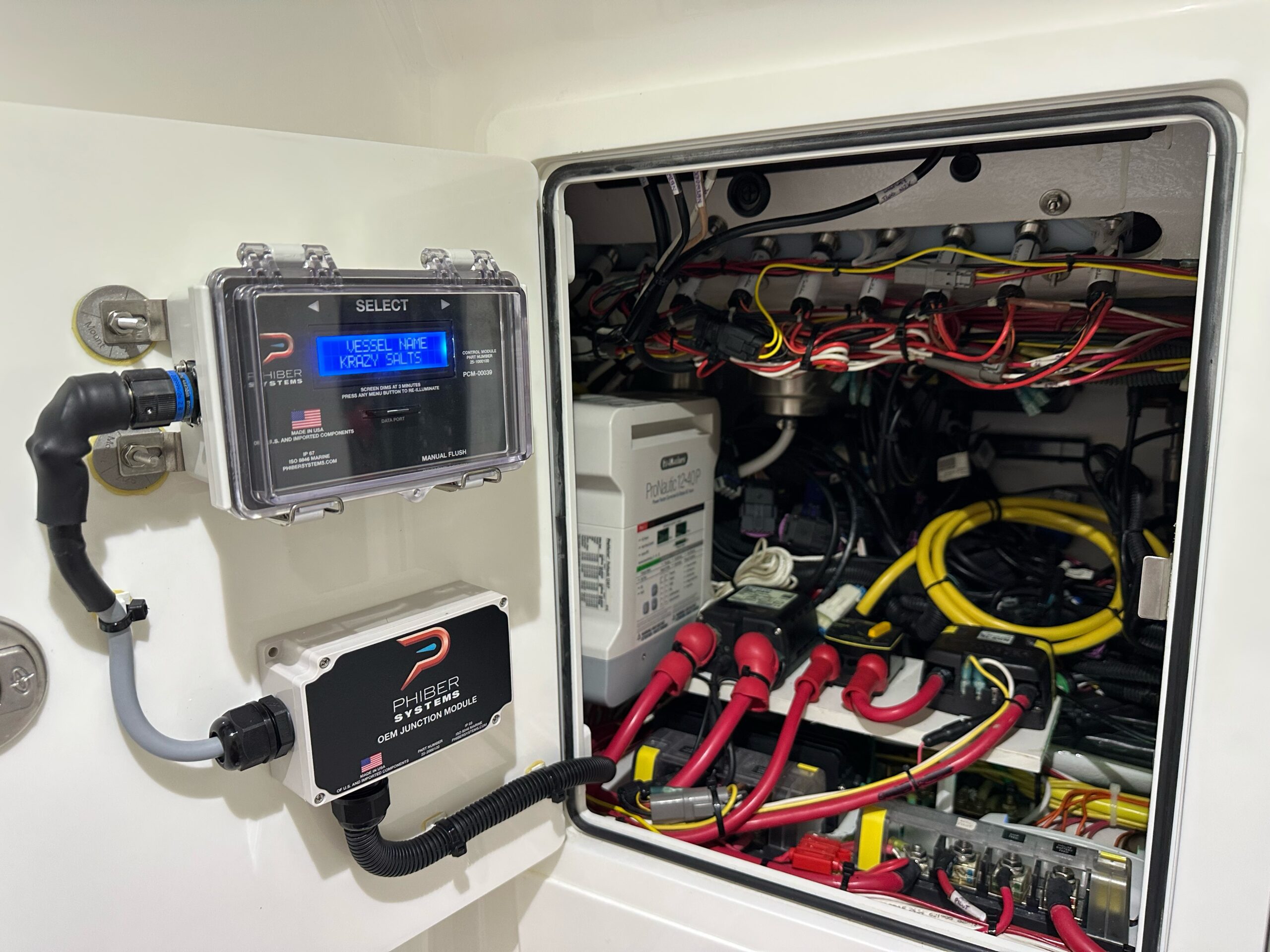
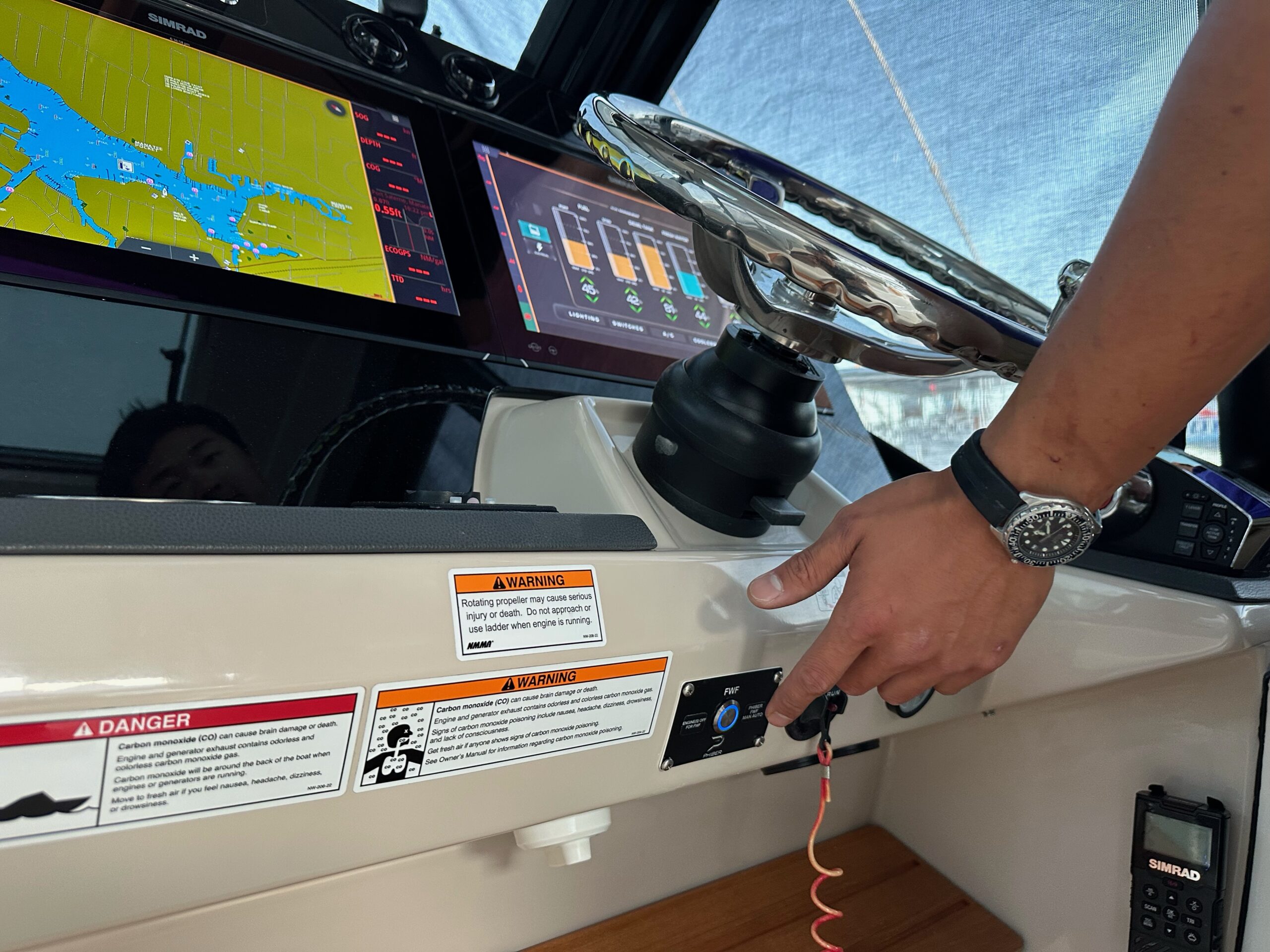
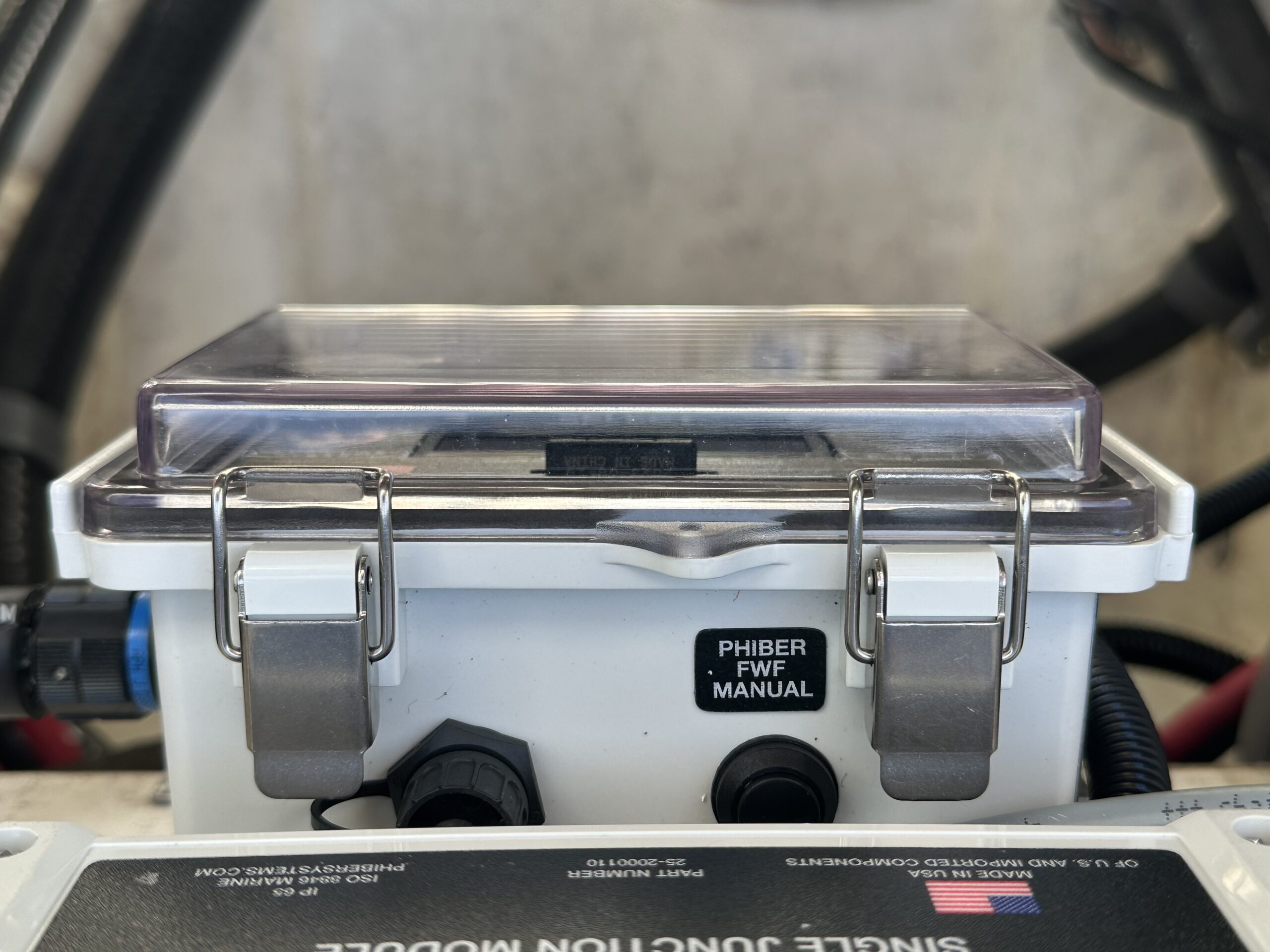
A push-button flush implies that there’s an onboard water source, and so PHIBER employs an inventive plumbing configuration that ties your vessel’s freshwater tank to the seawater networks on your engines. This required the development of a Hydrostatic Lock to create a perfect barrier between the two networks, protecting the freshwater source under any circumstance, meeting ABYC’s standards. The flush process is managed by a fully customizable Control Module that is networked and programmed to perform your flush as you want, all at the push of a button.
The PHIBER system can use on-board water from your freshwater tank or a garden hose connection to a bulkhead inlet water fitting on the boat. The control module is networked and programmed to do your flush as you want. When flushing from your on-board tank, the PHIBER manifold connects and distributes the fresh water to the raw water system. No need for chemical flushes or other complex methods, just fresh water at the touch of a button in minimal time after shutdown.
Learn more at PHIBERsystems.com